
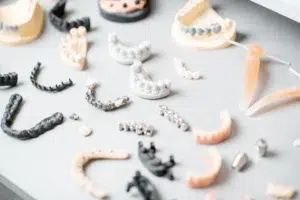
Dental materials are evolving quickly as new developments in material science and digital manufacturing continue to expand what is possible in restorative dentistry. Improvements in zirconia, hybrid ceramics, advanced composites, and emerging bioactive materials are giving dentists more flexibility when selecting restorations that balance strength, esthetics, and long term function.
One of the most noticeable changes in recent years has been the evolution of zirconia. Earlier generations were known primarily for their strength, which made them well suited for posterior restorations but sometimes limited their esthetic potential. Newer multilayer and high translucency zirconia formulations now allow clinicians to achieve improved esthetics while still maintaining the mechanical strength zirconia is known for. This has made zirconia a viable option in more anterior situations while continuing to perform well in high load areas.
Hybrid ceramic materials are also becoming more common in digital workflows. These materials combine ceramic and polymer structures, which can improve milling efficiency and reduce brittleness during fabrication. In some situations they can be easier to adjust and polish compared to traditional ceramics, making them useful for both chairside and laboratory workflows.
Another category gaining attention is fiber reinforced polymer composites. These materials can offer improved fracture resistance and fatigue strength compared to traditional composite materials. Because of these properties, they are often used in applications such as long term provisionals or certain implant related restorations where flexibility and durability can be beneficial.
Researchers are also exploring bioactive materials that interact more directly with the surrounding oral environment. Some of these materials are designed to release ions that support remineralization or help reduce bacterial activity. While many of these technologies are still developing, they represent an interesting direction for restorative materials that may eventually contribute more actively to oral health.
Why Material Selection Still Matters
With so many material options available today, choosing the right one for each case has become an important part of treatment planning. Optical properties, strength, wear behavior, and preparation design all influence which material will perform best in a given clinical situation.
Advances in multilayer ceramics and improved glass ceramics have made it possible to reproduce natural tooth anatomy and light transmission more accurately than in the past. At the same time, improvements in digital manufacturing have helped laboratories produce restorations with consistent precision.
For clinicians, this means the conversation with the laboratory often becomes less about what is possible and more about what is most appropriate for the case.
The Role of the Laboratory
At Valley Dental Arts, material selection is approached as part of the overall restorative strategy rather than a separate decision. As a boutique dental laboratory, the team evaluates the functional demands, esthetic goals, and restorative design of each case before recommending a material.
Experienced technicians understand how different materials behave during design, milling, finishing, and long term use. That insight helps ensure the final restoration not only fits accurately but also performs well over time.
Whether the case involves a highly esthetic anterior crown, an implant restoration, or a more complex rehabilitation, the goal is the same. Combine modern materials, digital technology, and experienced craftsmanship to create restorations that look natural, function predictably, and support long term clinical success.
This article is for informational purposes only and does not constitute clinical advice. All diagnosis and treatment decisions remain the responsibility of the treating dentist.