
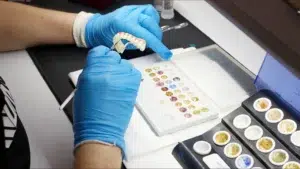
Digital technology has transformed restorative dentistry. Intraoral scanners, digital smile design, and CAD/CAM milling allow restorations to be designed and manufactured with remarkable consistency. Yet the most successful cases still depend on a balance between two things: measurable precision and human artistry.
Precision matters because the biological consequences of poor fit can appear long after the restoration is delivered. Marginal gaps and internal discrepancies can contribute to microleakage, plaque retention, secondary caries, and periodontal complications over time. Preparation design also plays a major role in how well digitally fabricated crowns fit. Even with excellent scanning technology, predictable outcomes often depend on strong collaboration between the dentist and the laboratory during planning and design.
At the same time, the success of a restoration is often judged visually rather than clinically. Patients evaluate how natural a tooth looks, how it blends with surrounding enamel, and whether the color and translucency feel authentic in everyday lighting. Shade matching remains one of the most technique sensitive aspects of restorative dentistry. Lighting conditions, tooth hydration, and observation differences can all affect the final result. Even when ceramics are digitally milled to a specific shade, final characterization and finishing often determine whether the restoration blends naturally or stands out.
Surface quality is another area where artistry directly affects long term success. Rough surfaces can encourage plaque accumulation and biofilm formation, which can influence periodontal health. Contours and contacts also require careful attention. Overcontoured restorations are associated with increased plaque retention, while poorly designed contacts can contribute to food impaction and inflammation.
For these reasons, modern restorative dentistry still benefits from a close partnership between clinicians and experienced technicians.
The Role of the Laboratory
At Valley Dental Arts, the philosophy has always been that precision and artistry work together rather than compete. As a boutique dental laboratory serving dentists since 1974, the focus is on combining digital technology with experienced craftsmanship.
Digital systems provide accuracy and consistency, while technician insight helps refine anatomy, surface texture, and shade so the final restoration looks natural and functions well.
How Valley Dental Arts Supports Clinicians
Several workflows at Valley Dental Arts are designed to strengthen the planning process and improve communication between the practice and the laboratory.
- Master Digital Diagnostic Model™ helps dentists and patients visualize outcomes before treatment begins, making planning and case acceptance easier.
- Collaborative Smile Design combines photos, scans, and clinical goals to guide shape, shade, and overall esthetics before fabrication begins.
- Full Arch and All on X planning focuses on occlusion, restorative parameters, and long term function from provisional design through final delivery.
- Implant restoration services include screw retained options, custom abutments, gingival characterization, and articulator based occlusal planning.
- Open digital workflows allow clinicians to submit files in common formats such as STL, PLY, or OBJ so communication stays simple and flexible.
A Balance That Still Matters
Digital dentistry continues to expand what is possible in restorative care. But technology alone does not determine the final outcome. The restorations that truly succeed combine accurate design, thoughtful planning, natural esthetics, and careful finishing.
That intersection of artistry and precision is where the best restorations are created, and it remains one of the most important roles a skilled dental laboratory can play in modern dentistry.
This article is for informational purposes only and does not constitute clinical advice. All diagnosis and treatment decisions remain the responsibility of the treating dentist.